

Custom Light Sources
ANYAO Lighting. Illuminating Every Corner of the World.
Precision-engineered light source solutions, created for the spaces, products, and ideas that deserve to be seen in their best light.
ANYAO Custom Light Sources
Light Source Engineering for Products That Need to Perform.
ANYAO develops custom lighting solutions for brands, hospitality projects, retailers, and professional lighting buyers. We help define the right color temperature, LED configuration, optical output, driver solution, and production standard for the finished fixture—not just for a single sample, but for repeatable bulk production.
 Light, Engineered Around Use
What We Engineer
One light source decision affects the entire product experience.
A lighting specification should begin with the end use. A restaurant lamp, a hotel bedside light, a retail display fixture, and a portable outdoor light may use similar-looking components, but they require very different decisions on comfort, color, glare, runtime, thermal control, and batch consistency.
Color temperature and visual mood
We help match CCT to the intended atmosphere: warm and intimate for dining, relaxed and refined for hospitality, or neutral and clear for retail and task-oriented spaces.
CRI, tint, and binning control
For projects where materials, food, wood grain, skin tone, or product color must look consistent, the specification can include CRI targets, tint requirements, and a defined LED binning strategy.
Brightness without unnecessary glare
Lumen output, beam angle, diffuser selection, and optical structure are considered together so the finished product creates useful light rather than simply a higher wattage number.
Driver, dimming, battery, and thermal design
The light source must work with the product’s input voltage, dimming method, battery capacity, charging system, heat path, and intended operating time—not as an isolated component.
Custom Color Temperature
Choose the right color temperature for the way a space should feel.
Every project has a different lighting purpose. ANYAO can tailor color temperature, LED module selection, driver settings, and supporting electrical configuration around the intended application. The reference chart shows the practical visual difference from ultra-warm 1500K through high-CCT 20000K light.
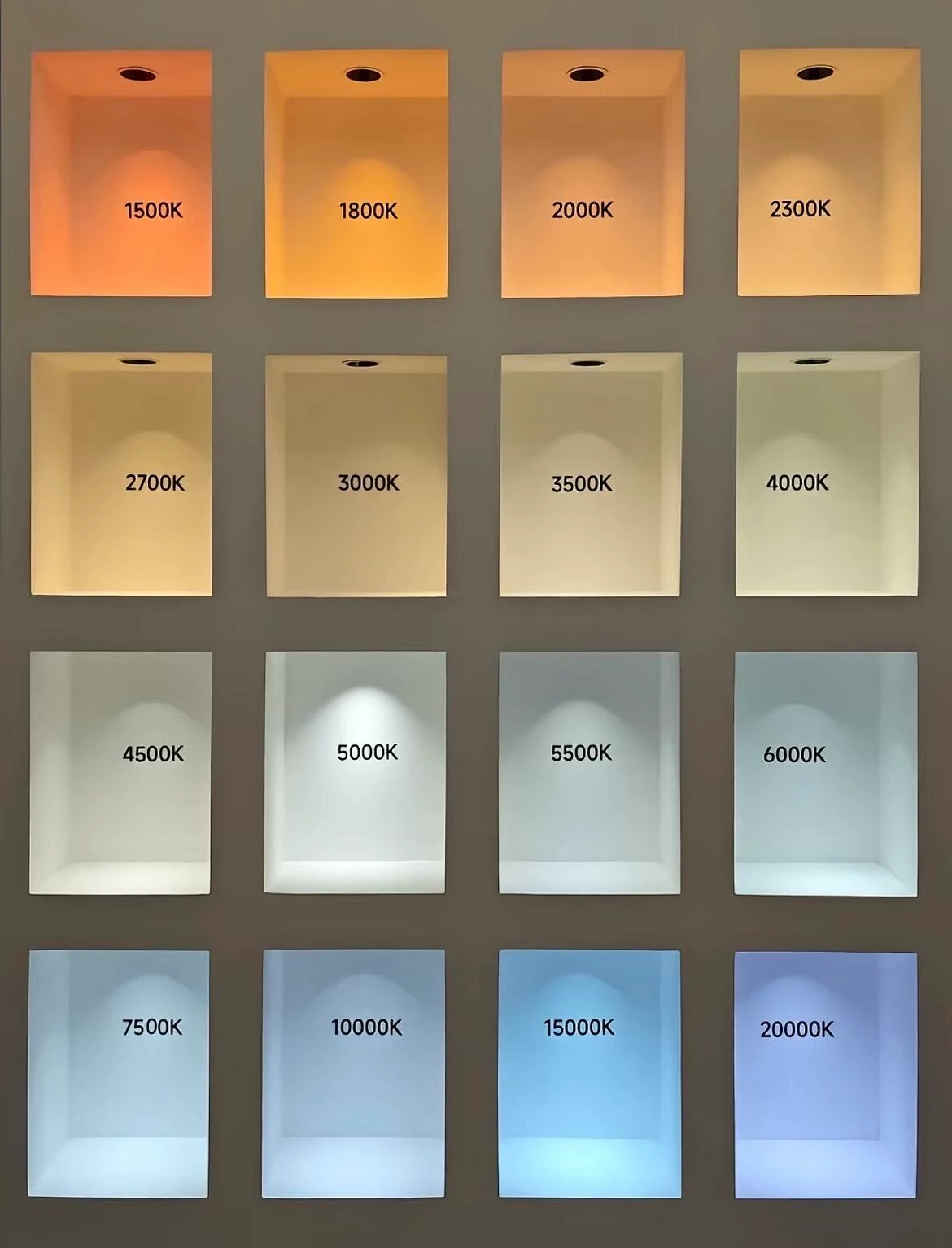
Visual reference: 1500K, 1800K, 2000K, 2300K, 2700K, 3000K, 3500K, 4000K, 4500K, 5000K, 5500K, 6000K, 7500K, 10000K, 15000K, and 20000K.
From Specification to Finished Fixture
Good lighting is not just a component. It is a controlled product experience.
A premium fixture is judged by more than whether it turns on. Buyers and end users notice the warmth of the light, whether it is comfortable to look at, whether the switch or dimmer behaves smoothly, how the battery performs, and whether the next shipment looks the same as the approved sample. Our custom source work connects those details before production begins.
- Match CCT to the material, finish, and target atmosphere.
- Balance output, diffusion, and glare control.
- Coordinate LED, driver, battery, and charging requirements.
- Confirm the approved sample before bulk production.
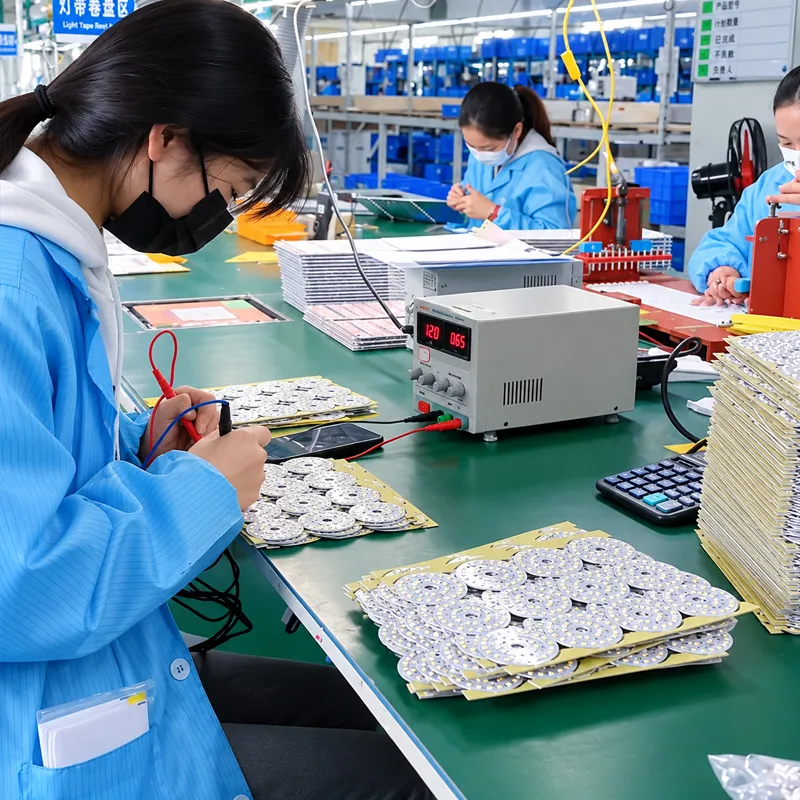
Validation Before Volume
Make the approved sample meaningful.
For an overseas buyer, the risk is rarely the first prototype. The real risk is whether the lighting effect, electrical behavior, and assembly quality remain stable when production moves from one approved unit to a bulk order. Our process is built around the checkpoints that matter before release.
- Confirm key requirements before sampling: target CCT, brightness expectation, dimming or switching behavior, input method, and use environment.
- Review the complete fixture rather than judging the LED module in isolation.
- Compare the production result against the approved sample and documented specification.
- Plan inspection points around appearance, electrical operation, assembly, packaging, and shipment readiness.
OEM / ODM Workflow
A clearer route from project brief to repeatable production.
Early technical alignment protects both the product and the delivery schedule. The more precisely the initial brief defines the product use case, target market, reference design, and expected order quantity, the more efficiently we can recommend a practical light source solution.
Project Brief
Share drawings, reference images, intended market, target quantity, and functional requirements.
Source Proposal
Align the light source approach around CCT, output, optics, controls, power, and product structure.
Prototype Review
Evaluate the complete sample for lighting effect, usability, finish, and technical integration.
Specification Lock
Confirm the approved standard and critical details before the production program is released.
Production Control
Follow the defined quality checkpoints through assembly, inspection, packing, and shipment preparation.
Custom Light Source FAQ
Questions buyers ask before specifying a custom light source.
These answers are written for lighting brands, importers, hospitality buyers, retailers, and project teams evaluating a custom LED lighting solution from China.
What information should I provide to receive a custom light source proposal?
The most useful starting brief includes a reference image, drawing, fixture dimensions, intended application, target market, required quantity, preferred color temperature, expected brightness, control method, and power source. If you do not yet have a complete technical specification, describe the desired lighting effect and product use case. ANYAO can then help identify the questions that need to be resolved before sampling.
How do I choose the right color temperature for a lighting product?
Choose color temperature based on how the light should make the space and materials feel. Around 2200K–2700K is commonly used for intimate dining and decorative ambience; 2700K–3000K suits cafés, bars, hospitality, and residential environments; 3000K–4000K is often selected where clearer product visibility is needed, such as retail displays. The final choice should also consider the shade material, diffuser, fixture finish, room colors, and whether the customer will compare multiple units side by side.
Can ANYAO customize more than the LED color temperature?
Yes. A custom light source program can be developed around color temperature, brightness, CRI target, LED module arrangement, optical diffusion, beam direction, driver configuration, dimming or touch-control behavior, battery and charging requirements, and thermal integration. The correct combination depends on the fixture design and the intended user experience, so these elements should be reviewed together rather than selected independently.
Why does LED binning matter for bulk lighting orders?
LED binning affects how closely one unit matches another in color appearance and brightness. This matters most in projects where several fixtures are installed in the same visual field, such as hotels, restaurants, retail displays, or multi-unit residential programs. Defining the acceptable color consistency level early helps reduce visible variation between the approved sample and later production batches.
How do you avoid a lighting sample looking different from bulk production?
The key is to make the approved sample a documented reference rather than a one-off prototype. Before bulk production, the project should align on the critical elements that can change the lighting result: LED selection, color temperature target, driver setup, diffuser or shade material, assembly structure, and the final operating mode. Production inspection can then compare output and appearance against that approved reference at the defined checkpoints.
Can you support rechargeable lamps and battery-powered lighting projects?
Yes. For rechargeable and cordless lighting, the light source must be designed together with battery capacity, runtime expectations, charging method, driver efficiency, heat management, dimming behavior, and the desired brightness level. Increasing brightness may reduce runtime, while warmer light and lower output can change perceived ambience. A practical proposal balances those trade-offs around the product’s intended use.
What testing should a custom lighting buyer consider before placing a bulk order?
The right test plan depends on the destination market and product category, but buyers commonly review lighting effect, switching or dimming performance, input and charging behavior, temperature performance, assembly quality, surface finish, aging behavior, packaging protection, and labeling requirements. For regulated markets, share the required compliance route at the beginning of the project so the component and product design can be planned around the relevant standard.
Is a custom light source suitable for small and medium OEM or ODM orders?
It can be, provided the requested customization is matched to the order scale and product goals. Some changes—such as selecting a standard CCT, adjusting an existing LED configuration, or tailoring a driver and control setup—can be more practical than creating a completely new platform. Share your expected order quantity and launch plan so the solution can balance differentiation, tooling, sourcing, lead time, and long-term repeatability.
Start With the Product Brief
Tell us how your lighting product needs to look, feel, and perform.
Send a reference image, drawing, dimensions, preferred CCT, expected quantity, or any project requirement you already have. Our team will help you turn it into a practical custom light source direction.